Whether you’re hiking Hadrian’s Wall Path or planning a day trip nearby, you may be wondering which attractions are worth visiting. The best thing about Hadrian’s Wall Path is that it offers countless historic ruins to explore, but there are also other unique sites that may pique your interest. From sampling beers at a brewery and stargazing in one of the best-preserved dark skies in England to hidden church museums and county parks, there’s something on this list for everyone! So strap on your runners and let’s explore the best sights along Hadrian’s Wall Path.
Contents
Money-Saving Tip for Attractions
Some attractions on this list require a purchased ticket, while others are completely free to visit. If you’re planning to visit multiple Roman forts and/or English Heritage sites, consider purchasing an Overseas Visitor Pass. This pass is valid for either nine or 16 days, depending on your choice, and grants you unlimited entry to all English Heritage-listed attractions, including many of the forts and castles along Hadrian’s Wall.
If you don’t want to purchase a pass, consider booking your tickets for English Heritage attractions online in advance to save up to 15% on entry prices.

Roman Vindolanda
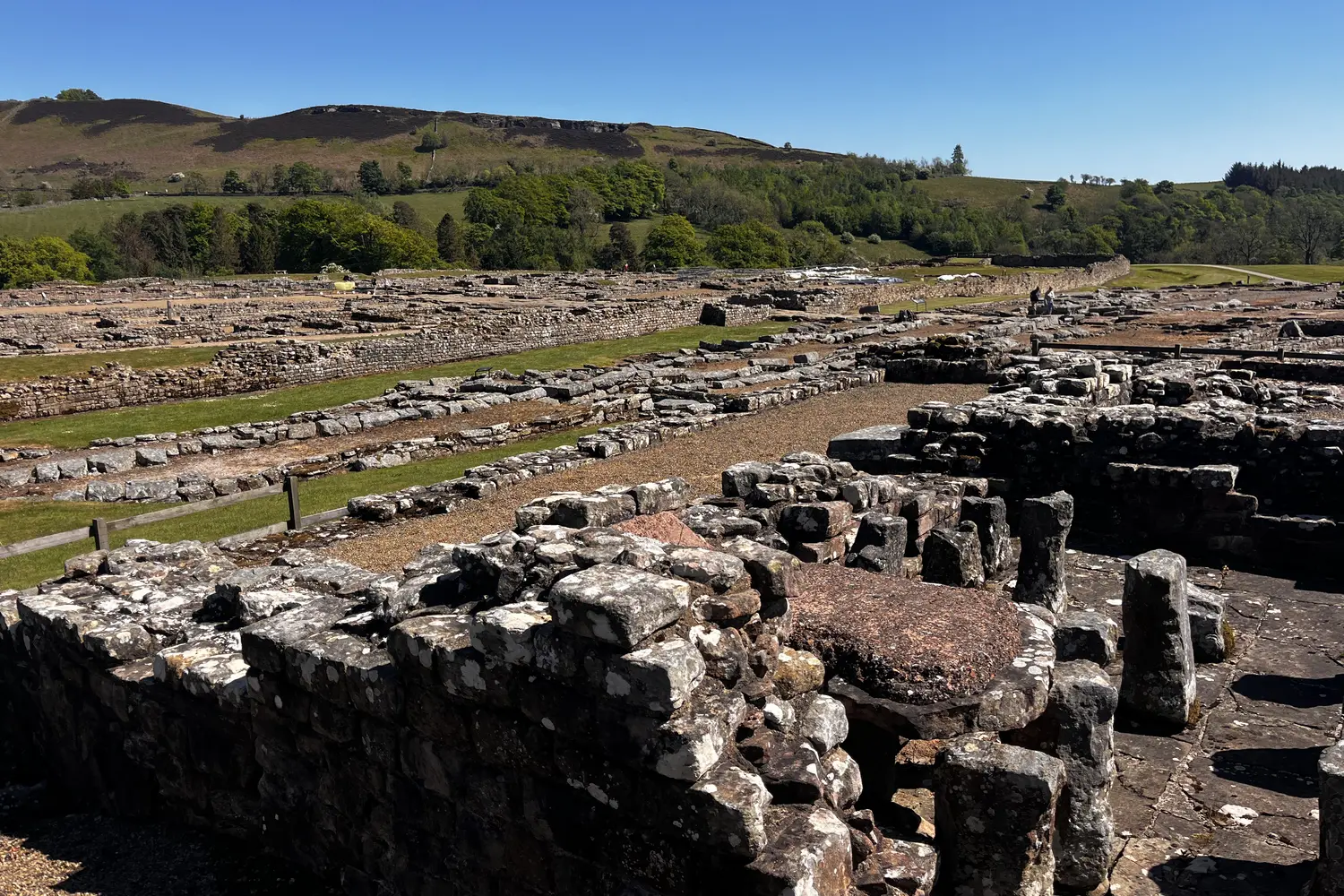
If you only stop at one Roman fort along Hadrian’s Wall, make it this one. Vindolanda was once a key Roman fort and is now home to the Vindolanda Tablets, some of the oldest surviving handwritten documents in the UK. This massive auxiliary fort was rebuilt many times with different materials layered on top of one another—essentially piling forts—which helped preserve the wooden tablets. These have allowed archaeologists to gain a deeper understanding of Roman life in Britain and led to the discovery of rare Roman artifacts like the tablets, boxing gloves used for training soldiers, and even an ancient wooden phallus.
The site has undergone extensive excavation, and there are roughly five acres of ruins to explore. Visitors can even volunteer to take part in the excavation process during certain weeks of the year!
In addition to exploring the ruins, you can also enter a reconstructed portion of Hadrian’s Wall (complete with towers), enjoy a meal at the café, watch live excavations, and tour the Vindolanda Museum, which houses thousands of Roman artifacts. It arguably has the best and most extensive collection of Roman artifacts of any fort along the wall.
Visitors should plan to spend at least two to four hours at Vindolanda.

Chesters Roman Fort
Chesters Roman Fort is another excellently preserved site along Hadrian’s Wall Path. Perched on the banks of the North Tyne just outside Chollerford, it’s home to one of the best-preserved Roman bathhouses in Britain. This former cavalry fort is quite large and has been heavily excavated, allowing visitors to enter many of the ruined buildings and get a true sense of Roman military life.
There is a small museum at the entrance that displays statues, pillars, and everyday Roman artifacts like pottery and jewelry. Free audio guide tablets are available in the museum to help you learn more about the items on display.
Plan to spend at least two hours exploring Chesters Roman Fort.

St. Michael’s Church
Located on the west side of Hadrian’s Wall, St. Michael’s Church is a must-see for those walking the wall or visiting nearby. This 12th-century stone church was constructed using stone from Hadrian’s Wall and the Roman fort of Maia, where Bowness-on-Solway now sits. Inside, visitors will find a hidden museum beneath the tower, highlighting the area’s Roman heritage and the church’s rich history.
St. Michael’s Church has a storied past and was once the temporary resting place of King Edward I (known as the “Hammer of the Scots”), who died just a few hundred meters away in Burgh Marsh while leading a campaign into Scotland in 1307. His body was brought to the church for safeguarding until the Royal Court arrived with his heir to escort it back to London.
Those interested in visiting the site of the King’s death can walk less than a mile north to the King Edward I Monument, which marks the exact spot.
It’s also worth noting that there is a water bottle refilling station behind the church, and the entrance is fully accessible.
Housesteads Roman Fort
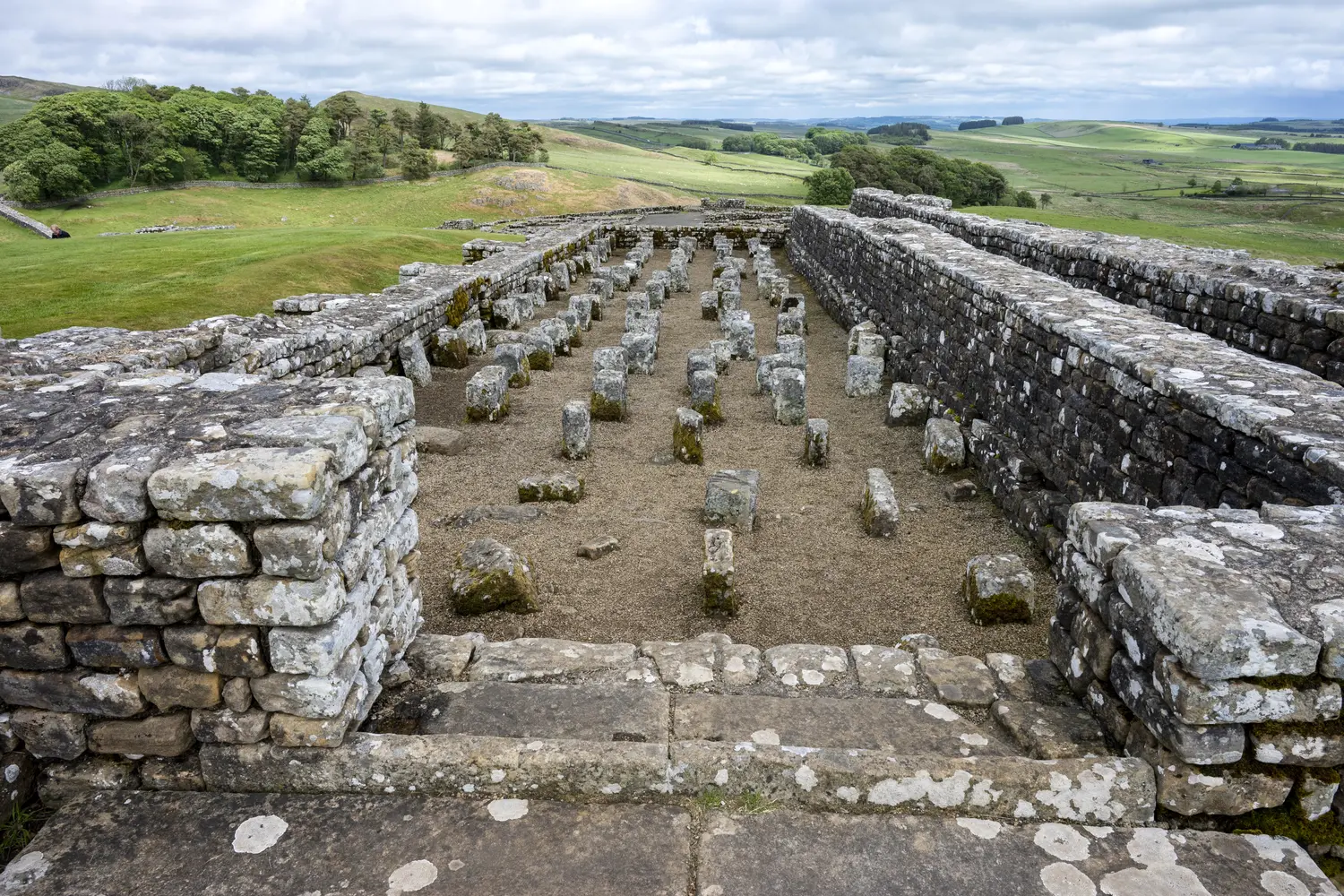
Housesteads Roman Fort is often considered the best-preserved fort along Hadrian’s Wall, though this is debatable—Chesters Roman Fort features taller excavated structures and equally detailed remains. While Chesters is famed for its Roman bathhouse, Housesteads is especially noted for its remarkably preserved water and toilet system.
Known to the Romans as Vercovicium, meaning “the place of the effective fighters,” the fort once housed around 800 soldiers. Highlights include the well-preserved in-floor heating system and the multi-person toilet facility, which may leave you with a newfound appreciation for modern plumbing.
Perched atop a dramatic ridge, Housesteads offers stunning views of Hadrian’s Wall and the surrounding English countryside. Visitors can also explore a small museum and enjoy refreshments at the café.
Expect to spend about two hours exploring all that Housesteads has to offer.

Walltown Quarry Country Park
The Walltown Crags provide sweeping views and are a favorite along the Hadrian’s Wall Path. Walkers will find the official trail runs directly along the top of these crags, but even those not hiking the full wall will find this spot worth visiting.
From here, you can see well-preserved stretches of the wall extending for miles. The area also features the Peace Labyrinth, Turret 45A (a former signal tower), and a charming café offering tea and baked goods. For visitors with accessibility needs or those with small children, there are short, paved circular trails at the base of the crags.
Walltown Quarry Country Park is also a designated Dark Sky Park, making it an ideal location for evening stargazing if you’re in the area after dusk.

Temple of Mithras at Brocolitia
The Temple of Mithras is a hidden gem unearthed at the former Roman stronghold of Carrawburgh. While today only earth mounds remain to mark the fort, the temple itself is well excavated and well worth a visit.
Mithras, a deity with roots in Indo-Iranian and Roman mythology, was worshipped by Roman soldiers not so much through formal religion but as part of a secretive cult. Mithras symbolized strength and bravery, and initiates were required to demonstrate great mental and physical endurance to progress through the ranks.
Visitors will find the remains of pillars and walls where worship once took place, along with a shrine inside the temple—into which some modern visitors have left coins as offerings.

Old Vicarage Brewery
If you’re looking for a pit stop and a pint, consider stopping by the Old Vicarage Brewery in Walton. Tucked beside the town’s old church, this small local pub boasts one of the most incredible views of the countryside from its backyard beer garden. It’s an ideal spot to enjoy a break for those walking the Wall, as it’s just a four-minute walk from Hadrian’s Wall Path. The owners, Graham and Charlotte, were once Wall walkers themselves. They fell in love with the Northumberland countryside and opened their microbrewery and B&B three years ago. They’re delighted to welcome visitors from around the world and to share their passion for brewing and hospitality. In the evening, many locals also pop in, offering a chance to enjoy a friendly countryside atmosphere.

Sycamore Tree Gap
The Sycamore Tree Gap became a beloved local attraction after it featured in the 1991 Robin Hood film. Sadly, the tree was illegally felled in 2023, leaving both the community and visitors in shock. The two men responsible were found guilty and will be sentenced in July 2025. In the meantime, a memorial has been set up around the stump, and seeds have been harvested to grow a new tree. Despite the loss, it’s still a great spot to visit due to its stunning views of Hadrian’s Wall and the surrounding countryside. Plus, a smaller sycamore nearby offers a similar photo opportunity.

Milecastle 39 / Winshields Crags
About 500 feet from the Sycamore Tree Gap lies Milecastle 39, atop Winshields Crags. This spot marks the halfway point of Hadrian’s Wall Path and is the highest point on the entire trail, sitting at 1,131 feet (345 meters) above sea level. A tall white stone marks the summit, where hikers can take incredible photos of the Wall seemingly flowing over the rolling crags to the east and west. While little remains of Milecastle 39 itself, the dramatic landscape makes it a perfect place to pause and celebrate reaching the midpoint of the trail.

Willowford Roman Bridge
Willowford Roman Bridge is a unique attraction along Hadrian’s Wall, marking one of three points where the Romans had to engineer the Wall to cross water. The site tells the story of three different bridges built to span the Irthing River during Roman times, following repeated flood damage. Today, the river has shifted slightly west of the original Roman bridge, and a modern metal footbridge has been installed. However, much of the original stonework and arches remain, allowing visitors to explore the ruins up close and examine Roman engineering details like chisel marks. It’s a must-see for anyone visiting Hadrian’s Wall.

Solway Aviation Museum
Hadrian’s Wall Path passes right by Carlisle Airport, making it a great spot not only for watching planes but also for visiting the Solway Aviation Museum. Aviation enthusiasts can explore a wide array of aircraft, including the Cold War-era Avro Vulcan bomber, Britain’s first jet bomber—the Canberra—and the sole surviving Blackburn Beverley heavy transport aircraft. Inside the museum, exhibits showcase Cumbria’s aviation history and the RAF’s role in the Second World War, featuring artifacts like survival gear, ejection seats, and aircraft engines. One of the highlights is sitting in the cockpit of a Vulcan bomber with a guide who explains the aircraft’s features and shares stories from her missions.
Milecastle Inn
Another excellent pit stop along Hadrian’s Wall is the Milecastle Inn, located just north of Haltwhistle and south of Cawfield Quarry. The pub is ideally situated in the heart of the trail’s most difficult terrain, making it a perfect place to rest your feet and enjoy a meal before continuing along the path. This charming, family-run inn dates back to the 17th century and features a beautiful stone interior and an excellent beer garden with sweeping views of the surrounding fields and crags. It’s a popular stop for many tourists hiking the wall or visiting the nearby Roman forts, so we highly recommend booking a table in advance if you’re hoping to enjoy dinner here. Be sure to sample their homebrewed beers when you stop by!
Pike Hill Signal Tower
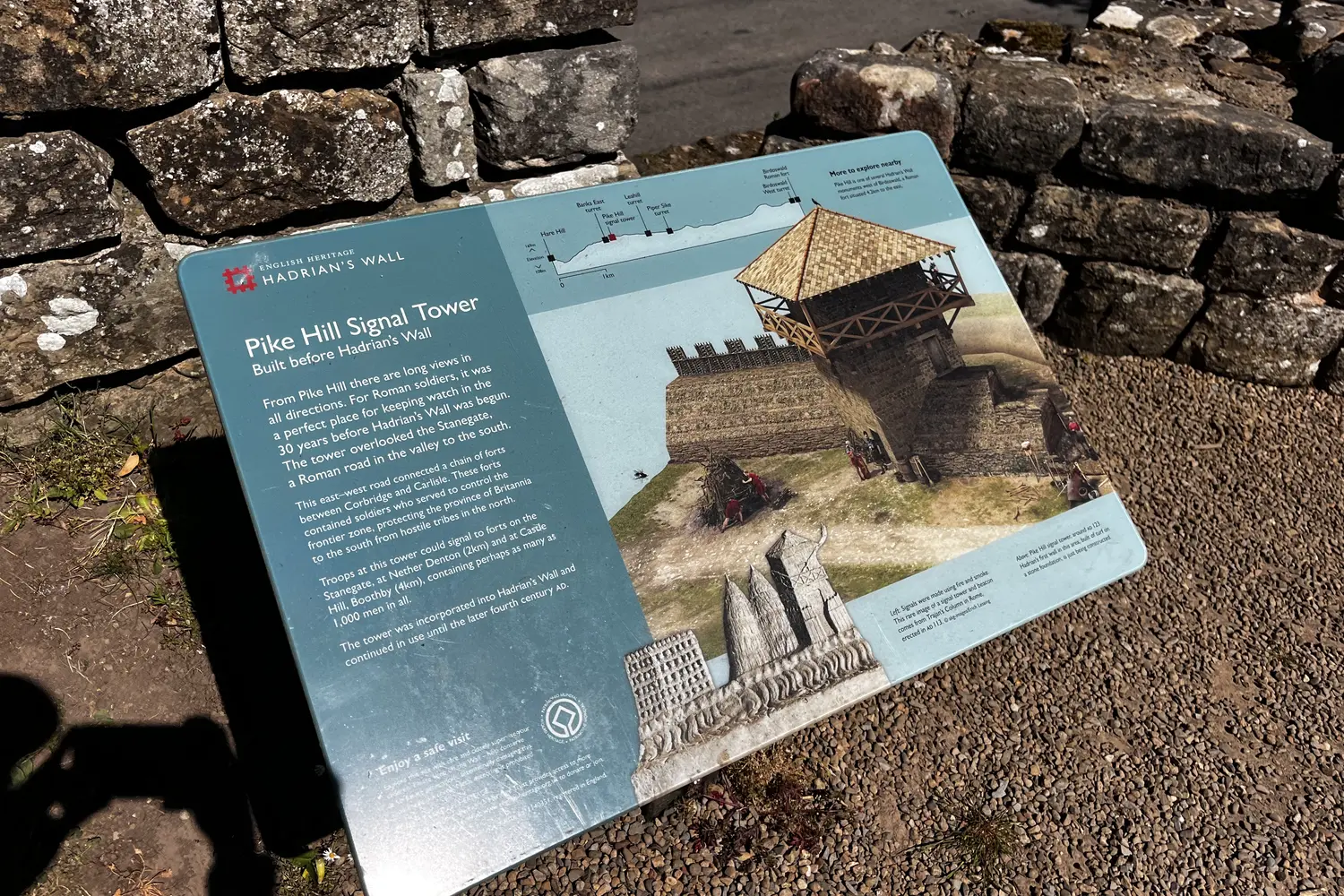
Many of the turrets and towers along Hadrian’s Wall look identical—except for Pike Hill Signal Tower. That’s because Pike Hill was constructed 30 years before Hadrian’s Wall, originally built as a signal tower (believed to have used smoke or fire) to communicate with forts and towers as far as 2.5 miles (four kilometers) away. The tower stands on a high ridge and features more substantial masonry than the turrets built along the wall. Today, visitors can explore the ruins of this once-towering structure and imagine what it was like to peer out toward Scotland and spot approaching threats as a Roman soldier nearly 2,000 years ago. Banks East Turret 52A is located right next to Pike Hill, making it a convenient two-for-one stop for day-trippers.
The Sill: National Landscape Discovery Centre
The Sill is an excellent free attraction for hikers and day-trippers, especially those unable to tackle the nearby steep crags. Located just north of Vindolanda, The Sill is a landscape education center offering free access to its grassy rooftop terrace and café. Visitors can enjoy panoramic views of the English countryside from the accessible roof, explore The Sill’s free permanent and temporary exhibitions, and grab a bite to eat at the café. The Sill is open daily from 10 a.m. to 5 p.m. between April and October.
Twice Brewed Brewery
Located next to The Sill, just south of Hadrian’s Wall in Once Brewed, sits Twice Brewed Brewery. This is an excellent stop for anyone in need of a cold pint or a bite to eat while walking the wall. Visitors can pop into the dog-friendly taproom and sample a variety of beers and gins, all brewed in-house. There’s also a beer garden, perfect for enjoying the sunshine. Twice Brewed offers a range of traditional British dishes, ideal for fueling up before the next leg of your journey. If you’re visiting on a Saturday, call ahead to sign up for their 1 p.m. Tutored Beer Tasting, which includes six different beer samples and a walk-through of the hops and malts used in brewing.

Corbridge Roman Town
Corbridge Roman Town is well worth a visit—even if you’ve already explored other Roman forts along Hadrian’s Wall. Its appeal lies in both its unique purpose and strategic location. While other forts were built primarily for military housing, Corbridge Roman Town (known as Coria to the Romans) was established south of the wall as a walled military compound surrounded by a large civilian settlement at the intersection of two major Roman roads—highlighting its strategic importance. Like Vindolanda, multiple forts were constructed on top of one another at Coria, preserving many artifacts in excellent condition.
Many of the ruins now rise over two meters tall, offering a fascinating landscape to explore. Visitors can even walk along a perfectly preserved Roman High Street. Of particular interest is the Corbridge Hoard, housed in the adjacent museum. This is one of the most significant archaeological discoveries from Roman Britain—a collection of armor, weapons, and personal items buried by a Roman soldier nearly 2,000 years ago. The armor was remarkably well preserved, allowing historians to finally understand how the armadillo-like plates were assembled.
Carlisle Castle
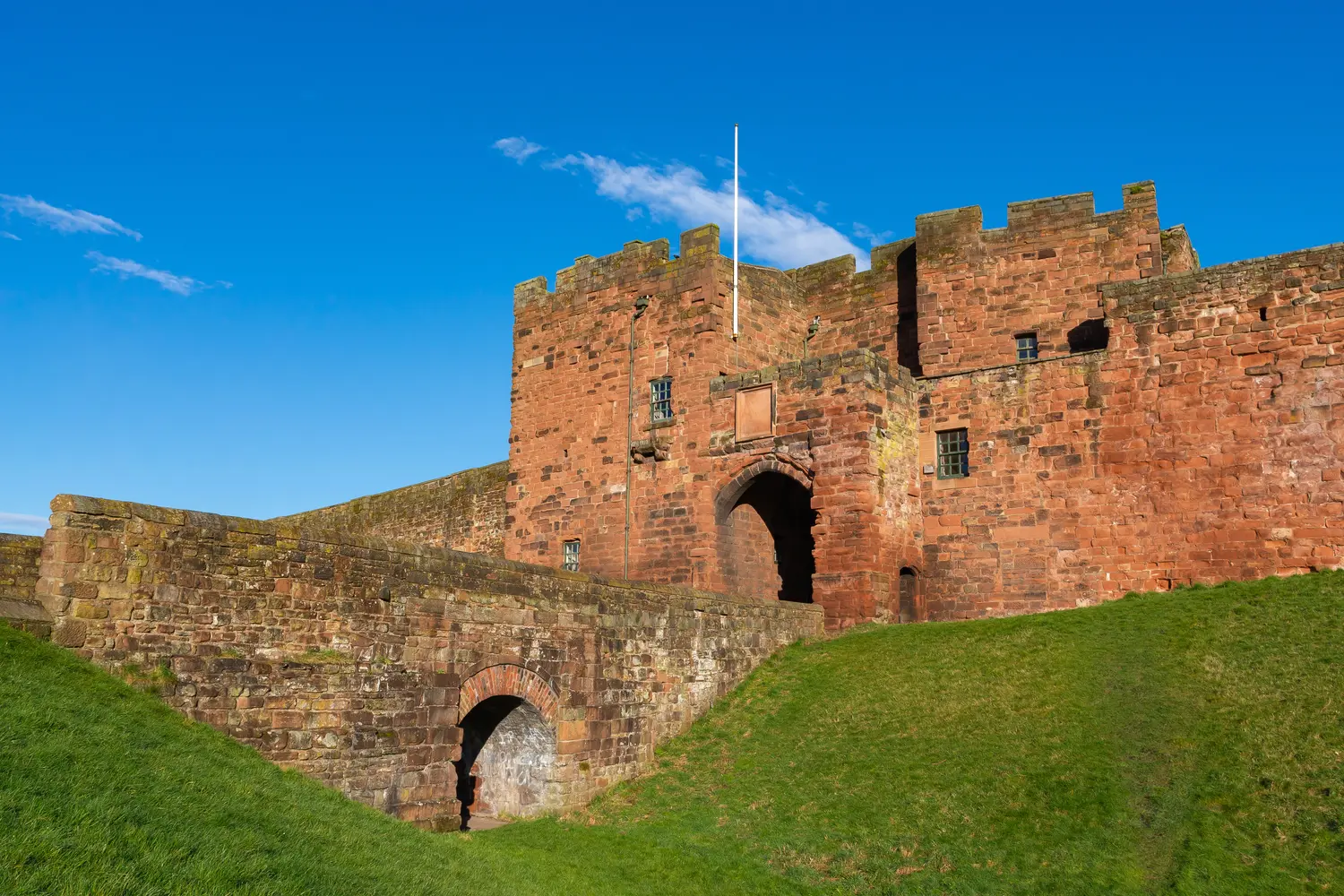
Hadrian’s Wall predates Carlisle Castle, but many of the stones used in the castle’s construction were taken from the famed Roman wall—a common practice at the time. Located in the city of Carlisle, this 11th-century castle was built atop the Roman fort of Luguvalium and played a key role during the Anglo-Scottish wars. In fact, the castle once held Mary, Queen of Scots, in 1568, as well as several Jacobites between 1745 and 1746.
Today, visitors can explore the expansive grounds, visit Queen Mary’s Tower, see prisoner carvings in the dungeon, and learn more about the castle’s history through interactive exhibits.
Admission to Carlisle Castle also includes entry to the on-site Cumbria Museum of Military Life, which covers over 300 years of military history in the region. One highlight is a Bible from the First World War, pierced by a bullet that stopped in its pages—a miraculous story, indeed.

Segedunum Roman Fort and Museum
Segedunum Roman Fort and Museum marks the eastern end of Hadrian’s Wall and offers more than you might expect. Between 1975 and 1984, the fort was extensively excavated, leading to the full uncovering of its internal layout. Today, Segedunum is considered one of the most thoroughly excavated Roman forts in Britain. Visitors can view the site from a 35-meter-tall viewing tower that provides a bird’s-eye perspective.
While touring the grounds, you can use the Geotourist app for an informative audio guide. The museum displays a variety of artifacts recovered from the site, including weapons, armor, and personal items like Roman dice. Additionally, the fort features a full-scale reconstruction of a Roman bathhouse and a preserved 80-meter stretch of original Hadrian’s Wall.
Battlesteads Dark Sky Observatory
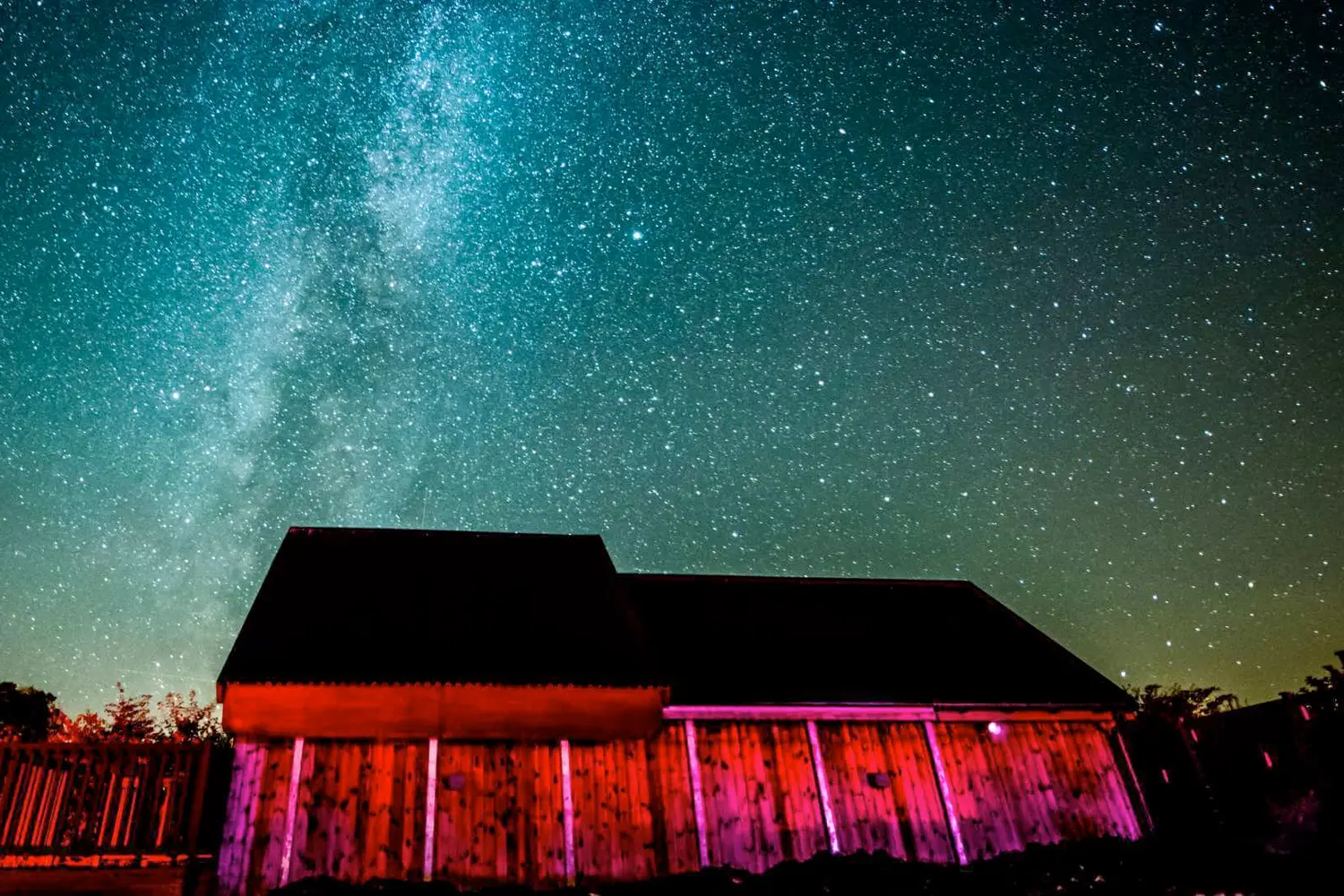
Northumberland is renowned for its Dark Sky Park, thanks to its remote location and minimal light pollution. Battlesteads Dark Sky Observatory, located six miles north of Chollerford, is a premier destination for stargazing. Staffed by professional astronomers, the observatory offers visitors access to powerful equipment, including a Schmidt–Cassegrain telescope, a Dobsonian telescope, and personal binoculars.
Guests can view meteorites up close, enjoy unlimited complimentary hot drinks, and even go aurora hunting with expert guides. Events such as Astronomy for Beginners and Stories of the Stars are held regularly, along with weekly general stargazing sessions. Be sure to check the observatory’s events page and book your spot a few hours in advance!

Thirlwall Castle
When Ed Sheeran sang of a “castle on the hill,” he may well have been inspired by Thirlwall Castle. These towering 14th-century ruins offer stunning views and an atmospheric glimpse into the past. Located just north of Greenhead, the castle is free to visit and features thick stone walls—built using stones taken from Hadrian’s Wall—that rise two to three stories high.
One of the most fascinating preserved features is a large oven that visitors can walk into, where scorch marks from centuries-old fires are still visible.
In the 15th and 16th centuries, border raids were common due to ongoing Anglo-Scottish conflicts. According to local legend, during one such raid, a loyal servant hid a golden table belonging to the Thirlwall family down a well, protecting it with a magical spell that is said to guard it to this day.
Hadrian’s Wall Path is rich with forts, ruins, and historic attractions, and you may not have time to see them all. We hope this list helps you narrow down the must-see spots and plan your ultimate adventure along this iconic Roman frontier—whether for a day trip or a multi-day hiking journey.
Wisata
Berita Olahraga
News
Berita Terkini
Berita Terbaru
Berita Teknologi
Seputar Teknologi
Drama Korea
Resep Masakan
Pendidikan
Berita Terbaru
Berita Terbaru
Berita Terbaru